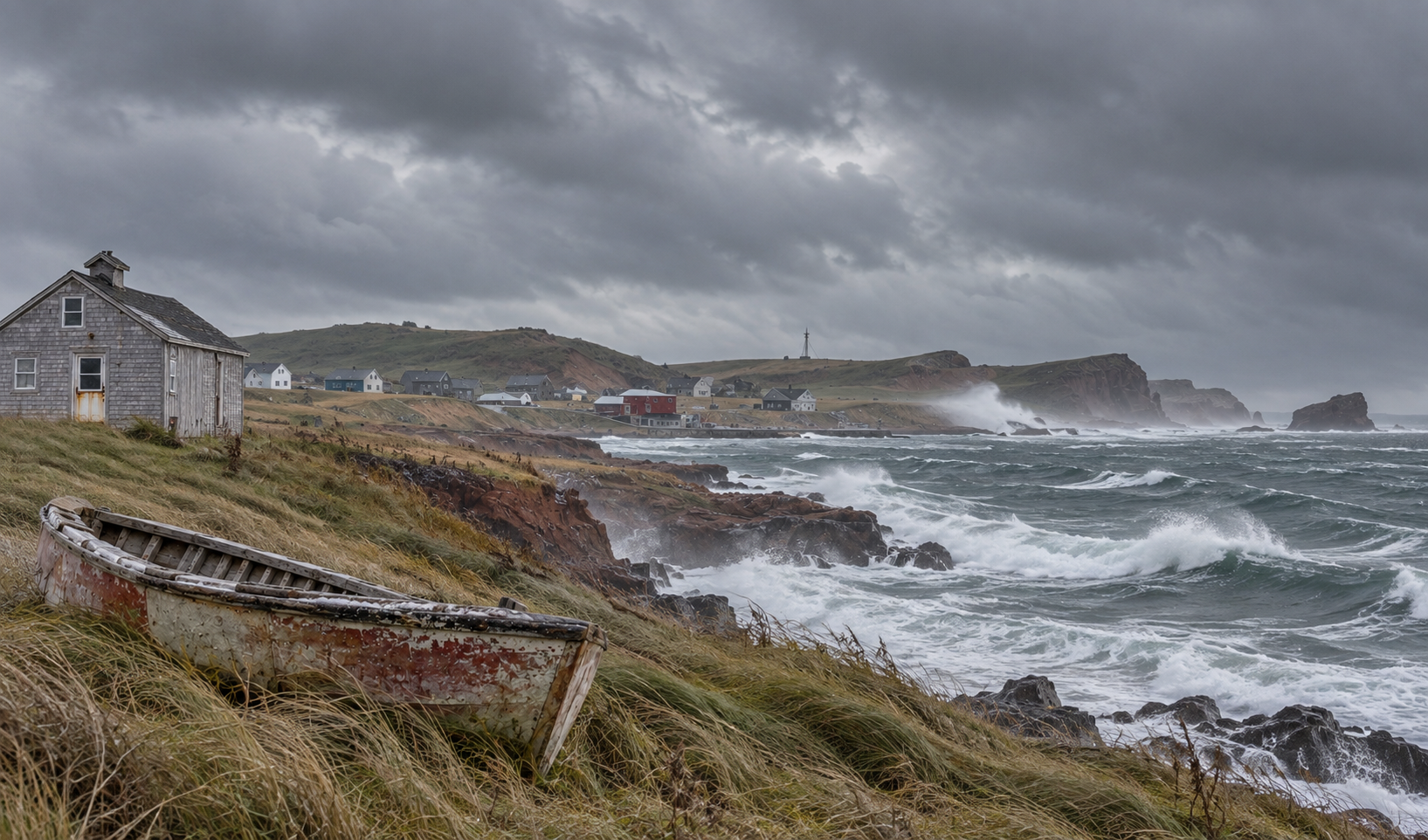
People sometimes ask if, in our retirement, we go south for the winter.
Although we often get as far south as Boston, we normally head north. We’ve
circumnavigated Newfoundland four times, visited Iceland in January,
explored the Gaspésie, shopped beneath the streets of Montreal, and spent
winters in Maine’s Thomaston to Belfast seacoast.
In Nova Scotia and Newfoundland, we are “from away”. At the moment we are
as far away from our chaotic world as is imaginable. We’re in the
Îles-de-la-Madeleine, the archipelago in the Gulf of Saint Lawrence, about
equidistant from Newfoundland, Labrador, and Prince Edward Island. It’s
harder to get here and takes about four times as long as a trip to Paris or
Rome.
Winter comes early here. You are never more than about a mile from the sea…
POLITICAL POWER · LAW AND COURTS · POLITICS

Donald Trump wants a 250-foot golden
Trump Arch in Washington.¹ Carly
Simon spent half a century leaving
people to…
In Case of Democracy, Break
Glass
LOCAL · VOTING RIGHTS · LAW AND COURTS
The guardrails held at the Supreme
Court yesterday. The question is how
many more times they’ll be tested.
In…
Maybe we’ve been looking at the wrong
envelope.
I’ve spent the last few weeks writing
about the Trump administration’s
attempt to give the Postal Service a
new job in American elections.
Apparently delivering the ballots
wasn’t enough. Under the new system…
ARTIFICIAL INTELLIGENCE · EDUCATION

“There are, like, things about the
world that make me feel, like, not
shocked if the Antichrist was…
PRESIDENTIAL LEGACY · WHITE HOUSE RENOVATIONS
Plans for a grand presidential
palace were scaled back to avoid…
ARTIFICIAL INTELLIGENCE · LEARNING
The article explores how generative
AI will shape childhood learning…
PUBLIC LAND MANAGEMENT · WILDLIFE CONSERVATION
The Bureau of Land Management sold
68 Oregon wild mustangs for $25
each, losing track of their fate
amid broader…
Don’t Censor the Story. Fire the
Reporter.
The Pentagon dismissed Stars and
Stripes’ editor, reporter, and
publisher amid concerns over…