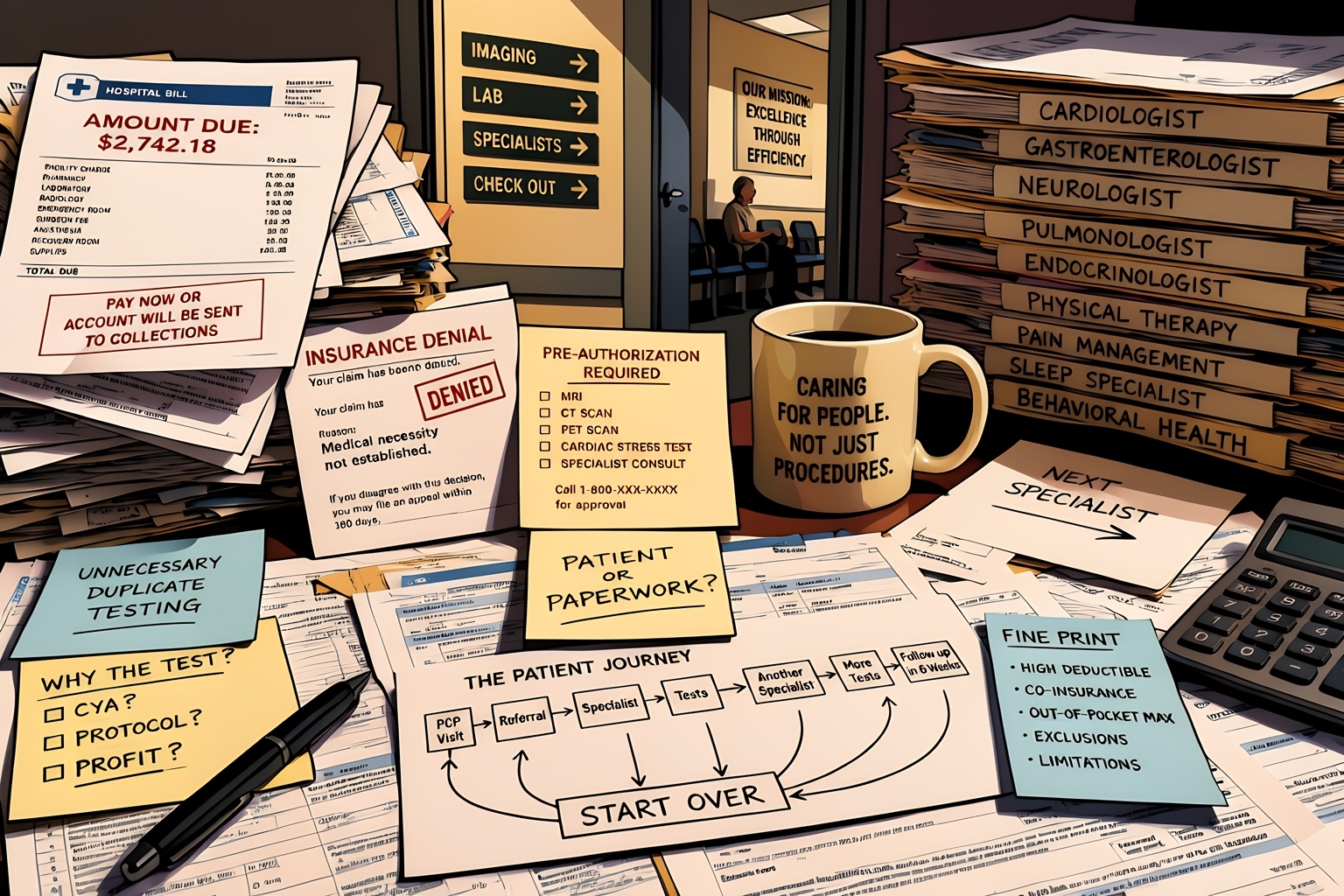
American medicine did not lose the family doctor by accident. It built a system that pays more for movement than memory.
The waiting room at 7:15 on a Tuesday morning used to sound different.
You could hear people talking to each other. Nurses knew which husband had dementia and which wife pretended she didn’t. Somebody’s child might run down the hallway holding a wooden tongue depressor like a sword. The receptionist knew who had just lost a job, whose mother had died, who needed to be squeezed in because “he never comes in unless something’s really wrong.”
The old family doctor was not efficient by modern standards. He spent time in ways the modern system has trouble counting because the patient was not only a chart or the next appointment in a measured day. The patient was a neighbor, part of the same community, someone whose illness did not disappear when the office door closed. That kind of medicine depended on memory.
He remembered that your chest pain might not be your heart because your wife had died three months earlier. He remembered that your blood pressure went through the roof every November because that was when your brother drank himself to death. He remembered your father’s lungs, your mother’s diabetes, your son’s panic attacks, your daughter’s allergy to penicillin. He treated people before he treated codes.
That older world should not be made cleaner than it was. It could be paternalistic, uneven, dismissive, and sometimes cruel to patients who did not fit the doctor’s assumptions. Women, poor patients, Black patients, immigrants, psychiatric patients, and people in pain often learned that familiarity did not always mean mercy. But when that form of medicine worked, it contained something modern healthcare has never managed to replace: a long memory attached to a human relationship.
That doctor is disappearing.