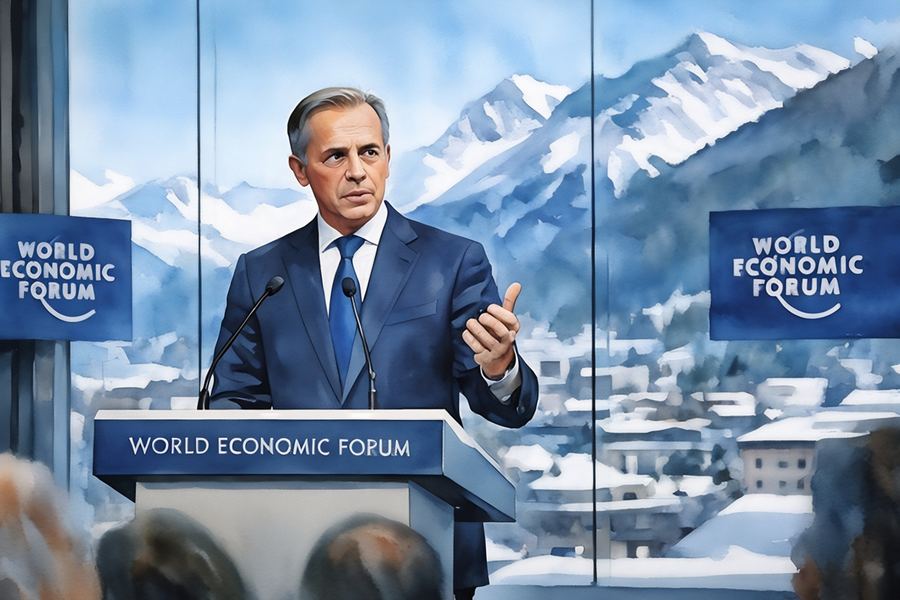
The speech that quietly changed the conversation
At Davos last week, Canada’s prime minister, Mark Carney, did something most leaders carefully avoid.
He told a room full of presidents, finance ministers, central bankers, and chief executives that a large part of the modern international system now survives because too many of them are pretending—not pretending about facts, but pretending about how power actually works.
For three decades, the global economy rested on a useful fiction: that integration meant mutual benefit, that institutions restrained the strong, that if you stayed inside the rules, the system would protect you. Leaders repeated the phrase “rules-based international order” often enough that it began to function less as a description than as a comfort.
Carney withdrew that comfort immediately.
“Stop invoking rules-based international order as though it still functions as advertised.”¹
He did not call this a transition. He called it a rupture—not slow change, but a break in the logic that governed the past generation.
The break, in his telling, is not that great powers are behaving badly. Great powers always behave badly when they can. The break is that economic integration itself has become the instrument of pressure.
This is no longer theoretical.