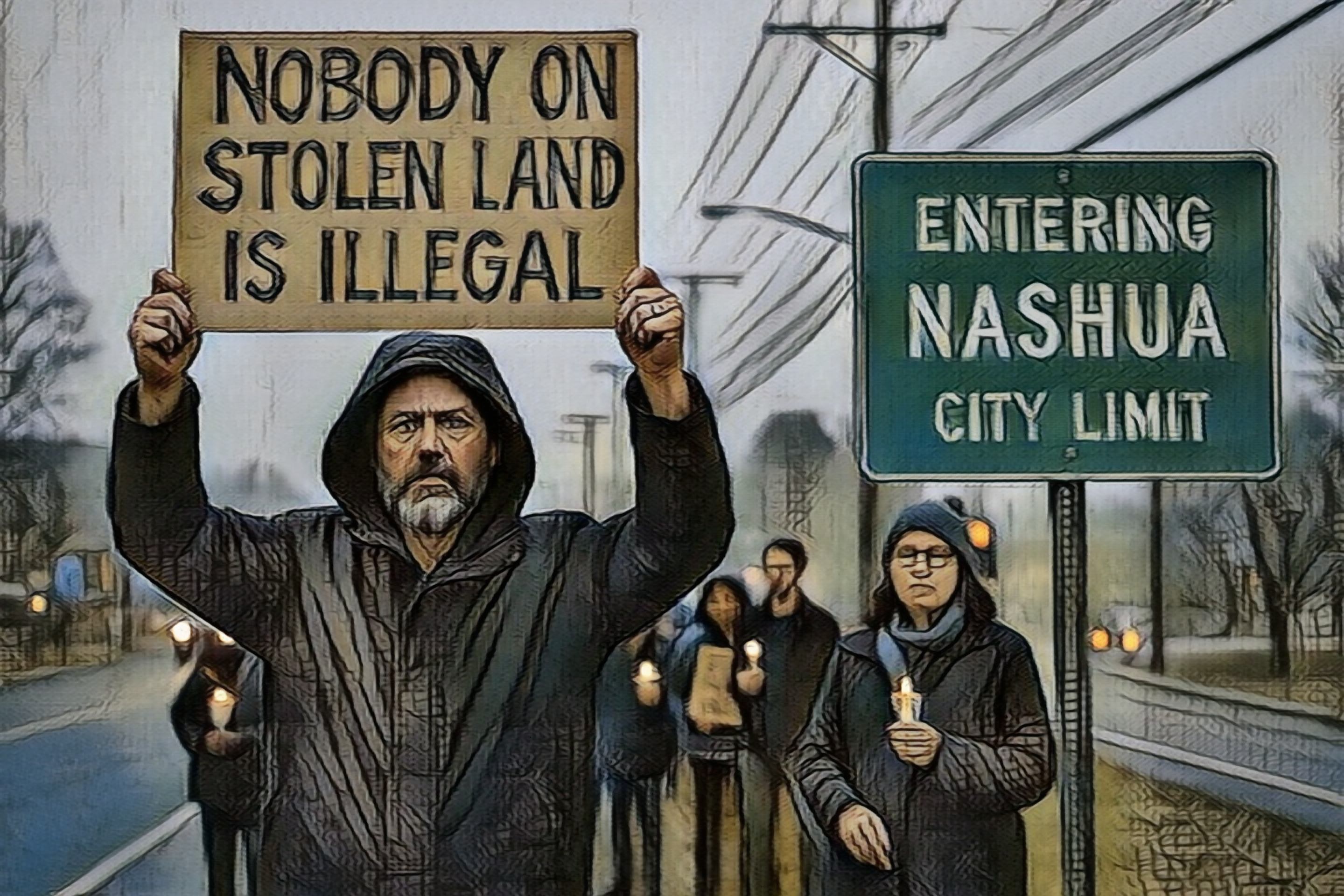
On a cold February morning, Arnuel Marquez Colmenarez walked into a Nashua courthouse to settle a misdemeanor. Minutes later, he was tackled by federal agents in the lobby and hauled away in front of stunned onlookers. One elderly man using a cane was knocked over in the scuffle. There was no warning, no explanation, and no warrant presented.
“Even people with valid asylum claims, work permits, or jobs are very frightened.” — Sarah Jane Knoy, Granite State Organizing Project
The arrest—recorded on surveillance footage and shared in grainy clips across social media—reverberated far beyond the courthouse walls. It marked a turning point. Not because it was the first such action in New Hampshire, but because it confirmed what many had feared: nowhere is safe.
That sense of insecurity has spread quickly. New Hampshire wasn’t supposed to be a frontline. It’s not Boston. It’s not the border. But immigration enforcement here has grown quieter and more brazen all at once—unannounced visits to restaurants, raids without warrants, courthouse detentions mid-arraignment.
In Concord, agents walked into a popular Mexican restaurant and took two workers off the line during a Friday lunch rush. No charges. No accusations. Just gone.
“I live in a state that has a slogan: ‘Live Free or Die.’ We’re seeing this kind of approach that is undermining that.”
That’s from a Peterborough business owner, one of many who watched as four employees at Mi Jalisco were pulled out of kitchens and off registers this winter. The co-owner, Genaro Quezada, said simply: “We’re working people. Everything is legal.” The raid forced a temporary closure and left regulars rattled.
Even children have been caught in the wake. One 8-year-old boy saw the arrest from the parking lot. His grandmother, Naomi Kroposky-Zyck, said he’s now afraid his school friends might “disappear.”
What’s happening isn’t about criminality. It’s about visibility. Even people with asylum claims, Temporary Protected Status, or green card applications are being detained.
Yolanda, a Randolph mother of two, begged for her diabetic husband’s release after he was held ten days without medication. “We’d rather he be deported than suffer here,” she said. ICE never answered her calls.
At Dartmouth, students seeking clarity got only silence. When they asked what would happen if ICE came to campus, there was no plan, no statement, no reassurance.
“Is there an emergency plan if ICE starts deporting students? President Beilock isn’t addressing this.” — Alejandra Carrasco Alayo, international student from Peru
While institutions remain quiet, the loudest opposition has often come from those not directly targeted—teachers, clergy, and local officials who now see federal policy in their own backyards.
In Manchester, Diane Kolifrath stood outside the airport waving a handmade sign: “Boycott Evil Avelo.” The airline had accepted a contract to fly deportation flights.
Kolifrath didn’t mince words: “People are being abducted and moved out of state without any crime committed or any due process.”
Her protest didn’t stop the flights. But it did break the silence. For the first time in a long while, some local officials began asking real questions.
“Are the people in jail? Do they need lawyers? The mystery is what set people off.” — Ciaran Nagle, Peterborough resident
That mystery—the secrecy surrounding ICE operations—isn’t incidental. It’s the point. Detention sites won’t confirm who they’re holding. Families scramble for answers. Fiancées track GPS pings through jail walls. Volunteers stage vigils outside Strafford County Jail, where the lights stay on long past midnight.
Every few nights, Maggie Fogarty drives to the jail with a box of candles and handwritten signs. She’s there to bear witness.
“Larger numbers are being deported now. The demand for help feels unrelenting.”
Fogarty is far from alone. Last August, more than 500 people marched to the jail from across New England. They carried photographs. Birth certificates. Missing persons flyers. It wasn’t just a protest—it was a roll call.
Eva Castillo, one of the march organizers, called it what it was: “We demand an end to the detention machine.”
Officially, New Hampshire remains a state with no sanctuary laws and limited immigrant protections. But on the ground, something is shifting. Teachers, clergy, even restaurant owners are beginning to question what kind of state they’re living in.
“If you are here illegally, you are not welcome in New Hampshire,” said State Rep. Joe Sweeney, defending his anti-sanctuary bill.
It’s a clear statement. So are the posters showing up in kitchens and break rooms across the state: Know Your Rights. Do Not Open the Door.
The irony cuts deep. The “Live Free or Die” state is now home to unmarked vans and secret detentions. No charges, no warrants, no trial.
Just fear—and the question left hanging in every church basement, high school classroom, and courthouse lobby:
Who’s next?