The envelope was heavier than it needed to be, thick cream stock with a return address that looked routine enough to ignore, which is why he left it on the corner of the kitchen table while the coffee machine finished its slow grind and the morning settled into its usual rhythm.
He had just come back from his walk—same route, same pace, the same half-read headlines glowing on his phone—and nothing in the room suggested anything had changed, yet the envelope drew his attention in a way that made it feel less like mail and more like something that would alter how the rest of the day unfolded.
When he opened it, the language was careful, advising caution around future donations to the Southern Poverty Law Center, an organization he had supported for years without much deliberation, the kind of support that becomes automatic when the institution itself feels stable.
The letter referenced a federal indictment announced on April 21, 2026, and the possibility of financial exposure tied to allegations that the organization had concealed how certain funds were used, and although it did not tell him what to do, it changed the context in which any decision would now be made.
“I don’t know what’s true anymore,” he said later, not as a declaration but as a recalibration, the kind that happens when familiar categories begin to blur.
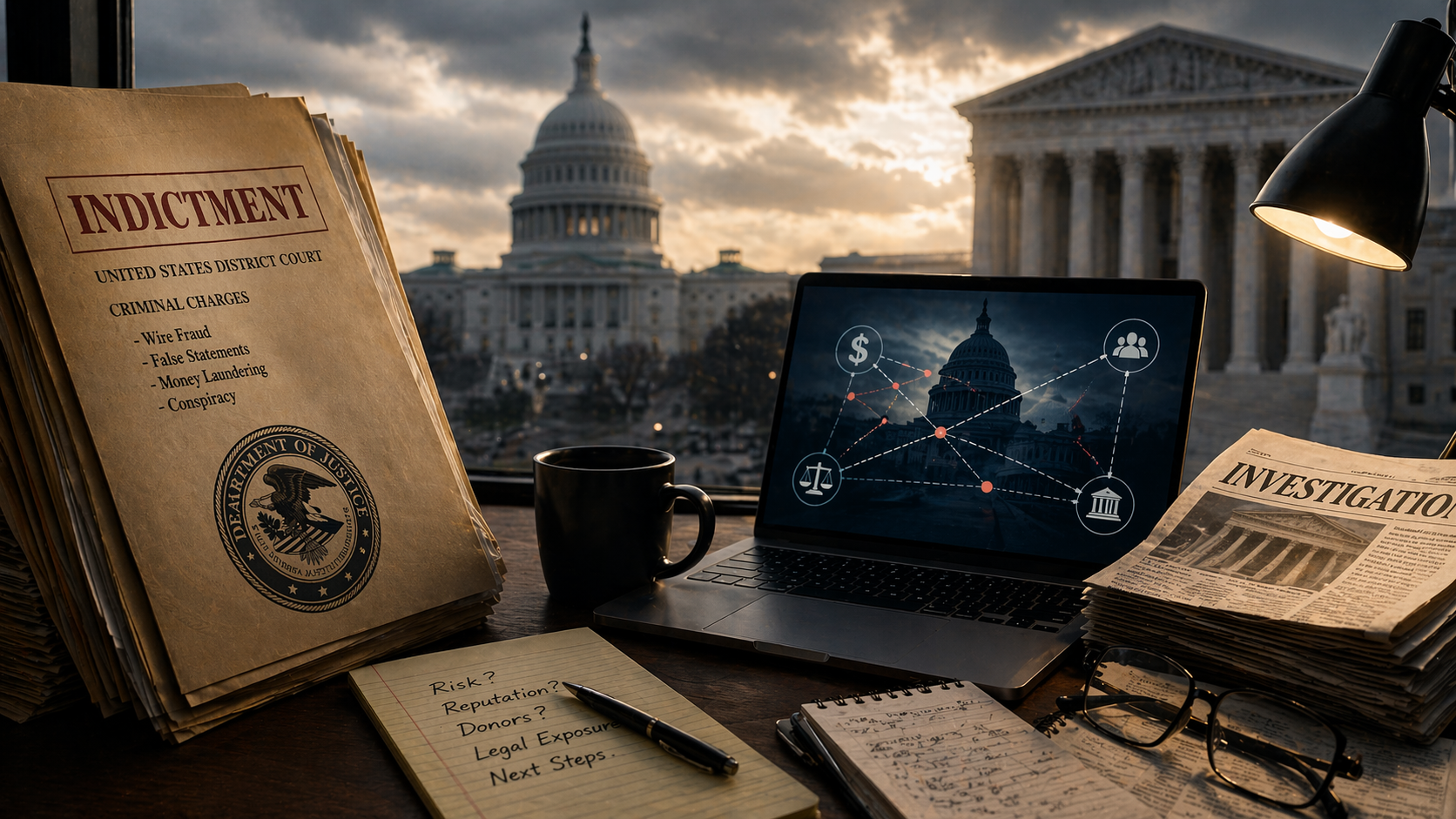
The indictment itself is specific. According to the Department of Justice, a grand jury charged SPLC with wire fraud, false statements to a federally insured bank, and conspiracy to commit money laundering, alleging that from roughly 2014 through 2023 the organization routed more than $3 million through intermediaries to individuals associated with extremist groups while representing those expenditures in ways prosecutors say misled donors and financial institutions, as described in the DOJ’s April 21 filing.¹
That is not an argument about whether informants were used. Federal law enforcement has long relied on confidential human sources in investigations involving organized crime and domestic extremism, a practice courts have upheld when properly documented and disclosed. The government’s theory instead rests on whether SPLC’s internal handling and external description of those payments crossed into misrepresentation, which is a narrower and more testable claim.
The case also turns on how narrowly those payments are interpreted—whether as isolated transactions or as part of a broader effort to infiltrate and dismantle extremist groups, a distinction legal analysts have flagged as central to how a jury might evaluate intent and disclosure.
In announcing the charges, the Justice Department said the case involved “a scheme to conceal the true nature of financial transactions and mislead donors,” placing the burden on documentation rather than narrative.¹ The organization, for its part, has said the payments were tied to longstanding intelligence-gathering practices designed to monitor violent groups, a defense that will ultimately be weighed against the government’s claims in court.
Some legal commentators have also pointed to factual disputes within the indictment itself, including questions about how certain extremist groups are historically characterized, issues that may not determine the outcome but could affect how the case is evaluated in court.
He set the letter down and reread the indictment summary on his phone, noticing how precise it was, how little it said beyond what could be charged, and yet how much it changed the way he thought about a donation he had never previously reconsidered.
The question in front of him was not legal. It was behavioral.
The context for that behavior had already been shaped by other cases he had followed, some closely, others only at the level of headlines that linger longer than their details.
In New York, Attorney General Letitia James—who had previously secured a civil judgment against Donald Trump for business fraud—was indicted in 2026 on mortgage-related charges tied to property disclosures. The case drew immediate national attention because of her role as a political adversary, but it also ran into early challenges, including disputes over evidence and procedural issues that complicated the prosecution’s path forward.
James denied wrongdoing and described the case as politically motivated, a claim that remains contested, yet the status of the case—charged, then weakened before trial—created a data point that was difficult to categorize cleanly. According to legal analysts cited in coverage at the time, fraud cases tied to disclosure disputes often hinge on proving intent, a standard that historically leads to mixed outcomes even outside politically exposed cases.²
That context does not resolve the question of motive, but it does place the case within a broader baseline where not all such prosecutions succeed, making its trajectory informative without making it definitive.
He folded the letter once and left it on the table, aware that he was now reading the SPLC case through a lens shaped by outcomes as much as allegations, noticing not just what had been charged but what had happened after charges were filed.
The same shift in attention appeared in reporting from 2025, when the administration directed the Justice Department to examine ActBlue, the primary processing platform for Democratic political donations, in an inquiry tied to campaign finance compliance and the handling of small-dollar contributions.
Public reporting indicated that the probe was initiated through executive direction and focused on whether the platform’s processing systems adequately verified donor identity and complied with Federal Election Commission requirements under existing campaign finance law, including donor verification and reporting provisions codified in federal statute.³ The statutory hook is well established, yet the scope of the inquiry placed a central piece of political infrastructure under scrutiny.
As of the latest reporting, the investigation had not produced criminal charges, but its presence introduced uncertainty into a system that had previously been treated as routine, affecting campaigns, donors, and vendors who relied on it.
Bradley A. Smith, a former chairman of the Federal Election Commission, has noted in public commentary that enforcement patterns in campaign finance often influence behavior before penalties are imposed, as participants adjust to perceived regulatory risk rather than waiting for formal findings.⁴
Back in the kitchen, he scrolled through those earlier stories, noticing how the details differed while the effect felt similar, not as a pattern he could prove but as a set of conditions that altered how decisions were made in advance of certainty.
The mechanism does not require coordination to function. It operates through visibility and repetition, where the presence of an investigation—especially one tied to a politically exposed target—changes the perceived cost of adjacent actions, even when the legal outcome remains unresolved.
That effect may extend beyond donors and institutions to individuals operating closer to the source of information. By describing sources and their roles in detail, the indictment introduces questions about how visible cooperation with civil society organizations might affect individuals embedded in extremist groups, a factor that could influence future willingness to provide information.
That dynamic is not unique to politics. In regulatory environments, firms routinely adjust behavior based on the direction of enforcement rather than waiting for penalties, a process documented in regulatory enforcement literature, including studies published in journals such as the Journal of Law and Economics, where scholars have described anticipatory compliance as a response to perceived enforcement risk rather than adjudicated outcomes.⁵
“The signal is often enough,” as that literature suggests. “You don’t need a conviction to change behavior; you need a credible possibility of exposure,” a principle that explains why decisions shift even when outcomes remain uncertain.
He looked at his checkbook, still in the drawer where it had always been, and closed the drawer without taking it out, aware that the decision had shifted from routine to conditional, even though none of the facts in his own life had changed.
The SPLC case will proceed through the courts, where the allegations about financial disclosure and intent will be tested against evidence, and it may ultimately stand or fall on whether prosecutors can substantiate their claims about concealment and misrepresentation.
The James case may resolve in a way that clarifies whether it was a legitimate prosecution that faltered or a weak case that should not have been brought. The ActBlue investigation may produce findings, charges, or nothing at all, depending on what investigators can establish under existing law.
Each of those outcomes will matter on its own terms, and none of them alone defines a system.
But before those outcomes arrive, the conditions they create are already influencing behavior, shaping decisions in ways that are difficult to measure but easy to recognize once they occur, as individuals and institutions adjust not to what has been proven but to what might be.
He picked up the letter again and placed it back in its envelope, not because the question had been resolved but because it had changed form, shifting from a matter of support to a matter of assessment.
Outside, the street moved as it always had, unchanged in any visible way, while inside the calculation continued, quieter than the headlines but more persistent.
“Nothing stopped,” he said later, trying to describe the difference. “It just stopped being automatic,” and in that shift—from assumption to evaluation—the effect had already taken hold.
⸻
Bibliography